Core Technology
Ceramics, one of the core assets of the Niterra Group
The Niterra Group has created social and economic value by materializing the performance and shapes demanded by our customers,
leveraging our core assets in ceramics such as "structural materials," "functional materials," "process technologies," "analysis and evaluation technologies,"
and "MI (Materials Informatics) and RX (Research Transformation)." Moving forward,
we will continue to utilize the Niterra Group's technological capabilities to contribute to solving the challenges facing the world.
Structural Materials
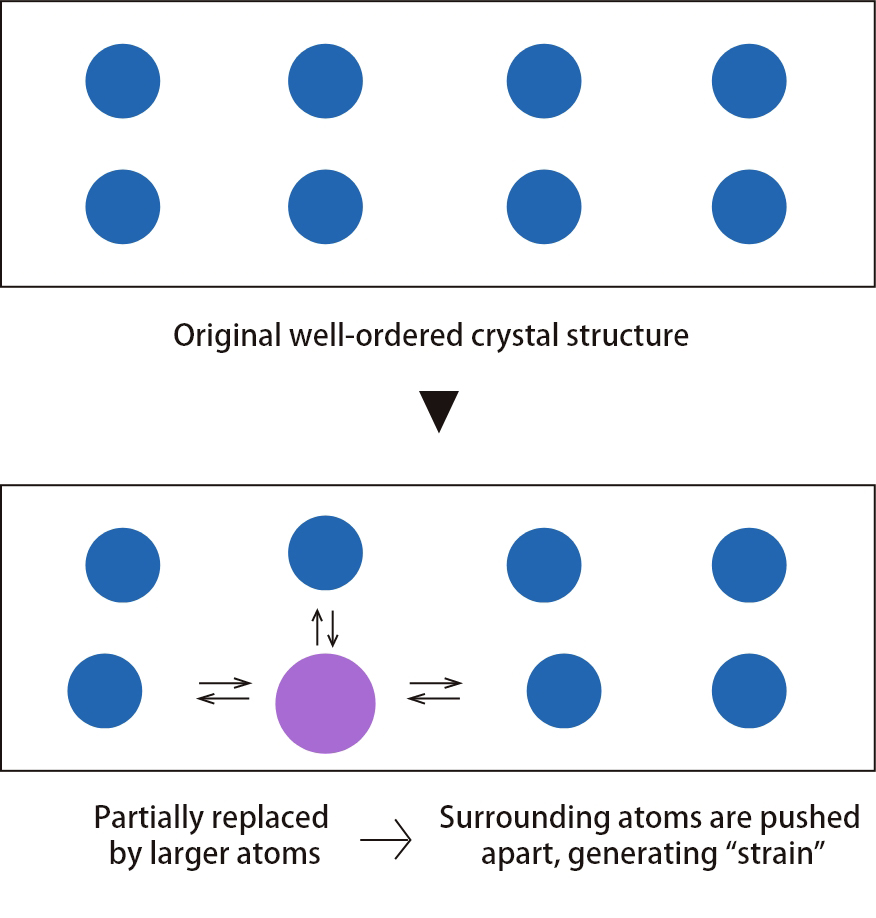
Structural materials are characterized by excellent strength, hardness, and heat resistance, and are used to support the structure of components. Based on our proprietary technologies that control the "microstructure" and "interface/surface"—which determine the performance of ceramics—we flexibly design and manufacture high-performance materials.
Interface/Surface Control Technology:Technology that controls the state of the material's surface and boundaries to improve performance.
Functional Materials
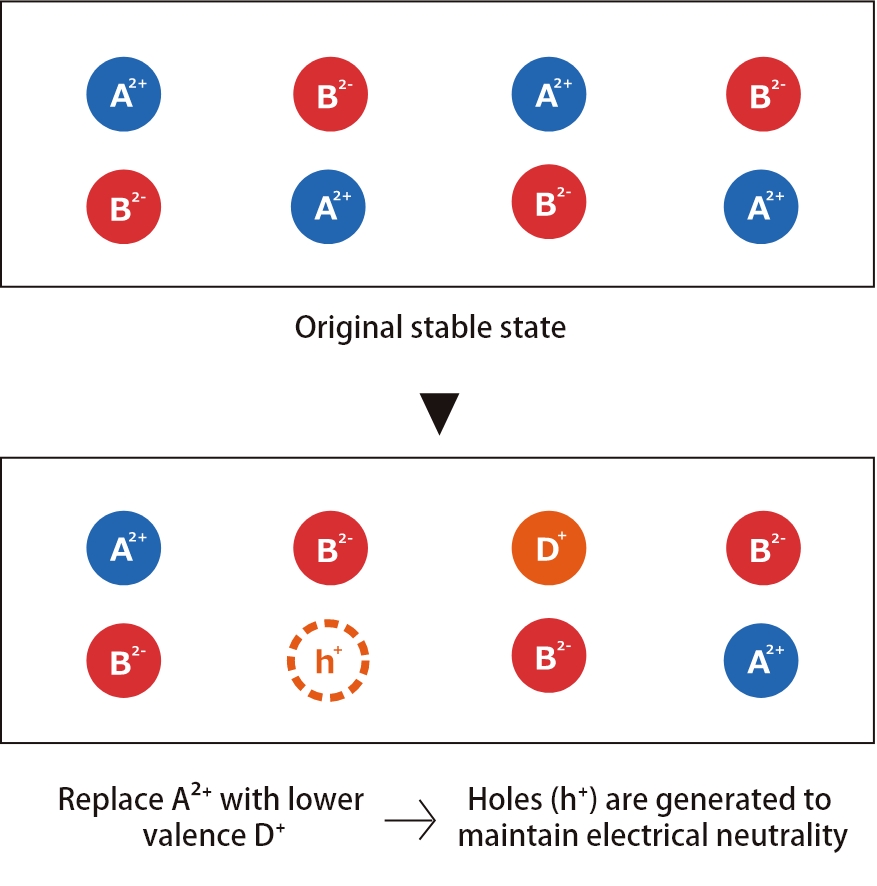
The Niterra Group develops and provides "functional ceramics" that fulfill specific roles, such as conducting electricity or converting pressure into signals.
Process Technologies
Powder metallurgy process (Manufacturing technology that creates the "ideal shape" from powder)
Powder metallurgy is a manufacturing method in which raw material powder is placed into a mold and compacted, or formed into sheets and laminated, and then fired at high temperatures below its melting point to create dense, sturdy components. Based on our core competence in ceramic material technology, the Niterra Group has achieved the coexistence of "complex shapes" and "advanced functions" through proprietary technologies cultivated over many years of product development. We support business innovation in a wide range of fields, from automotive engine components demanding high reliability to ultra-precise components for semiconductor manufacturing equipment.
Strengths of the Powder Metallurgy Process
-
1.Design flexibility
It is possible to create complex water or air passages (channels) inside the material, or embed heaters and electrodes within the ceramics. This strongly supports the miniaturization and multi-functionalization of components. -
2.Micron-level accurate finish
We possess a unique firing technology that precisely controls the shrinkage rate of the material when it is baked and hardened at high temperatures. This enables the stable mass production of highly accurate components while reducing post-processing steps such as polishing. -
3.Realization of special structures tailored to applications
We also excel in special structural designs that control the inherent properties of the material, such as "porous bodies" intentionally created with minute gaps.
Dissimilar material joining technology (Overcoming material barriers to connect new value)
The Niterra Group's strength also lies in "dissimilar material joining technology," which strongly bonds materials with vastly different properties, such as ceramics and metals. This process, which freely combines the advantages of each material, maximizes the inherent potential of ceramics and contributes to the realization of components and products with complex structures.
Reasons why dissimilar material joining technology is chosen
-
1.Firmly joining different materials
We securely bond materials that are inherently difficult to join—such as ceramic to ceramic, ceramic to metal, and ceramic to resin—at the molecular level or through our proprietary joining technologies. -
2.Designing the optimal joining method by analyzing the operating environment in detail
We precisely calculate the difference in "expansion and contraction due to heat (thermal expansion)" for each material and design a joining method that minimizes strain. We realize products that are resistant to breakage even in environments subject to repeated severe temperature changes.
Analysis and Evaluation Technologies
At the Niterra Group, we fully utilize state-of-the-art analytical technologies to theoretically substantiate the grounds for performance improvements. By doing so, we reduce the need for trial-and-error prototyping and leverage this to develop and improve the quality of next-generation products tailored to customer needs.
MI・RX
The Niterra Group has built a unique framework that highly integrates digital technology with our knowledge of ceramic manufacturing accumulated over many years, enabling the completion of everything from material development to mass production in a short period of time.