



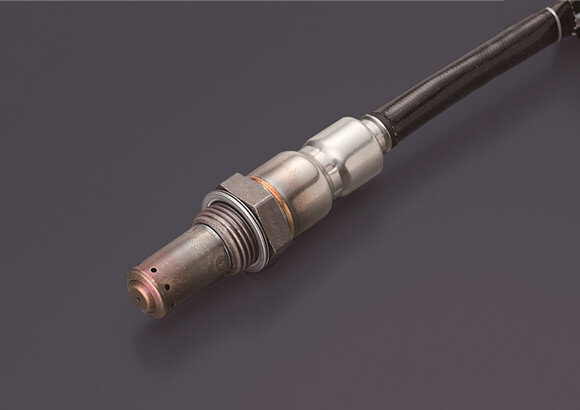
Wide Range Oxygen Sensor
Overview
By controlling it in combination with a dedicated interface, it is possible to obtain output that corresponds to the oxygen concentration in the exhaust gas.
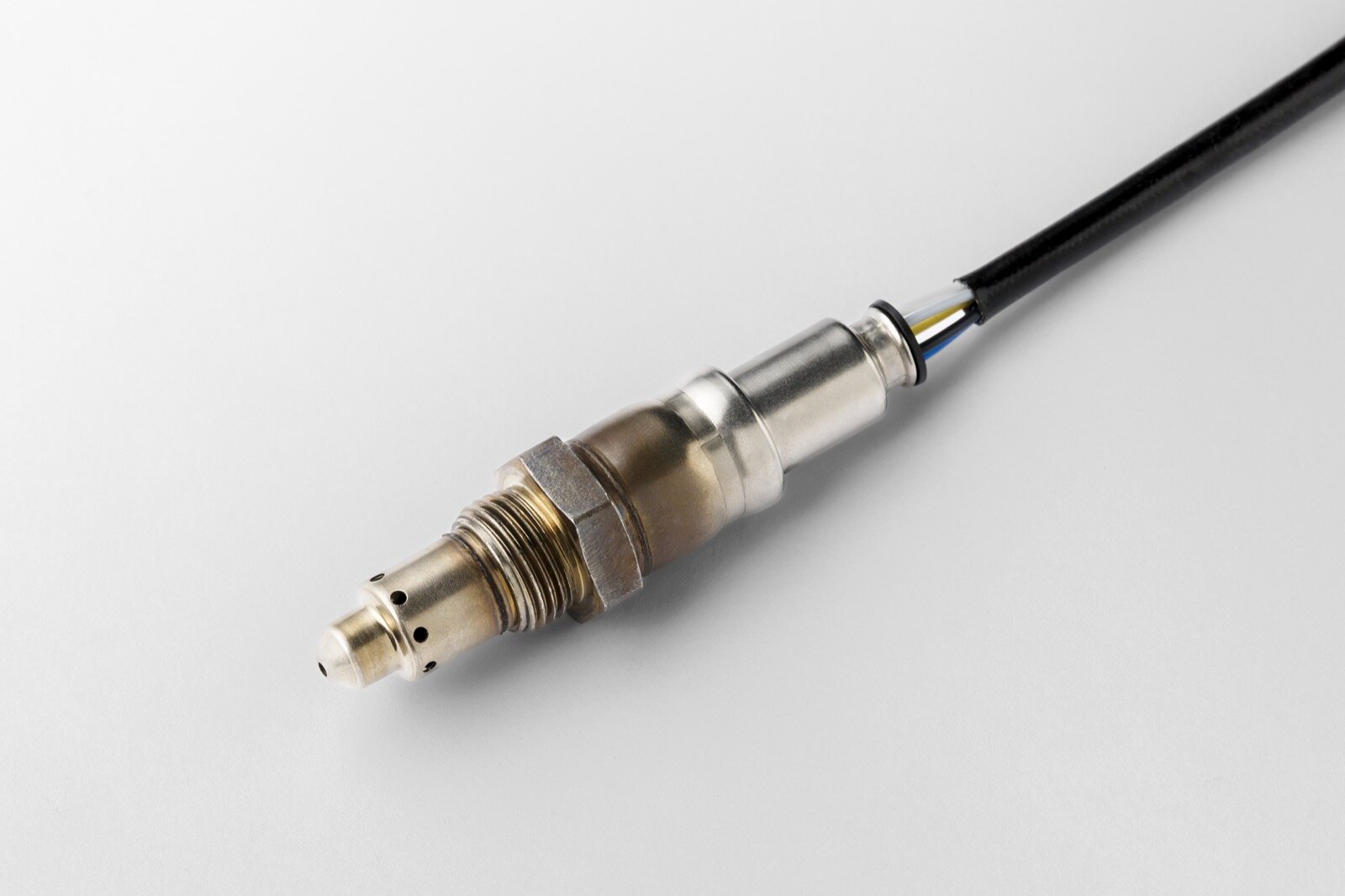
Main Products
ZFAS®-U
Purpose
By controlling it in combination with a dedicated interface, it is possible to obtain output corresponding to the oxygen concentration in the exhaust gas. This control sensor covers the entire range of air-fuel ratios, from precise control of the stoichiometric point to lean burn control and rich cooling control of exhaust components. Because it can also control the lean region, it can be applied not only to gasoline engines but also to diesel engines.
Features
- High-precision output is possible across the entire range.
- A completely waterproof structure that does not require a standard atmospheric pressure.
- Excellent heat resistance and significantly improved durability and reliability.
- Early activation due to the integrated structure of the element and heater.
While oxygen sensors only determine whether the mixture is rich or lean, full-range air-fuel ratio sensors can determine the deviation from the stoichiometric air-fuel ratio, enabling more precise stoichiometric air-fuel ratio control. The figure below (frequency distribution of generated air-fuel ratios during mode operation) shows the frequency distribution comparing the frequency of air-fuel ratio control. The further away from the stoichiometric air-fuel ratio, the more harmful gases are present in the exhaust gas, while near the stoichiometric air-fuel ratio, the exhaust gas is cleaner. Control using a full-range air-fuel ratio sensor, compared to control using an oxygen sensor, results in the controlled air-fuel ratio being distributed more close to the stoichiometric air-fuel ratio, and the amount of harmful gases generated in the exhaust gas is reduced. Furthermore, using a full-range air-fuel ratio sensor enables air-fuel ratio control outside of the stoichiometric ratio, leading to increasing applications in lean burn and diesel engines.
XCU®-UA (ASIC for ZFAS®-U)

Purpose
The XCU®-UA is an ASIC that integrates the control circuit of the ZFAS®-U into a single chip, and controls the ZFAS®-U as an interface circuit between the vehicle CPU and the XCU. It also outputs the element temperature control information of the ZFAS®-U to the vehicle ECU, and by controlling the element temperature, a stable oxygen concentration output can be obtained.
Features
- The basic control circuit for ZFAS®-U.
- It has a built-in element temperature control circuit.
- Equipped with digital communication (SPI) for ASIC status input/output.
- Basic OBD detection functions such as detecting disconnections and short circuits.
ZFAS®-U-SM(Controller integrated in connector)
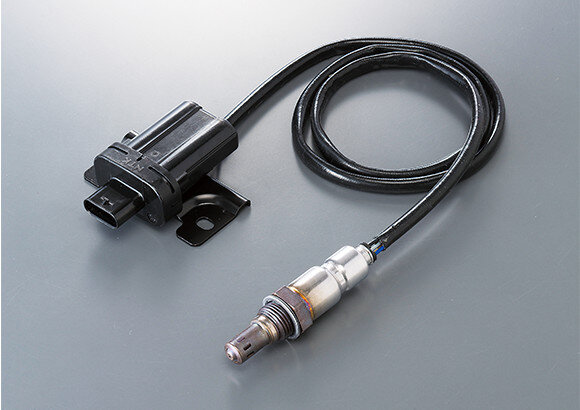
Purpose
This is a smart-type, full-range air-fuel ratio sensor with a built-in control circuit within the connector. Oxygen concentration output and other sensor status information are transmitted from the control circuit within the connector to the vehicle's ECU via CAN communication. This reduces the development time required to integrate ASICs and sensor control circuits into the vehicle's ECU. Furthermore, because the sensor and control circuit are a single unit, sensor correction information can be directly written to the control circuit, enabling high-precision correction using the correction information of each individual sensor. It can be applied as an intake-side oxygen concentration sensor.
Features
- Control circuit built into the connector
- CAN communication function
- The proven ZFAS®-U sensor body is used.
- OBD function.
- High-precision correction.
For inquiries regarding this product, please contact us here.
Related Products
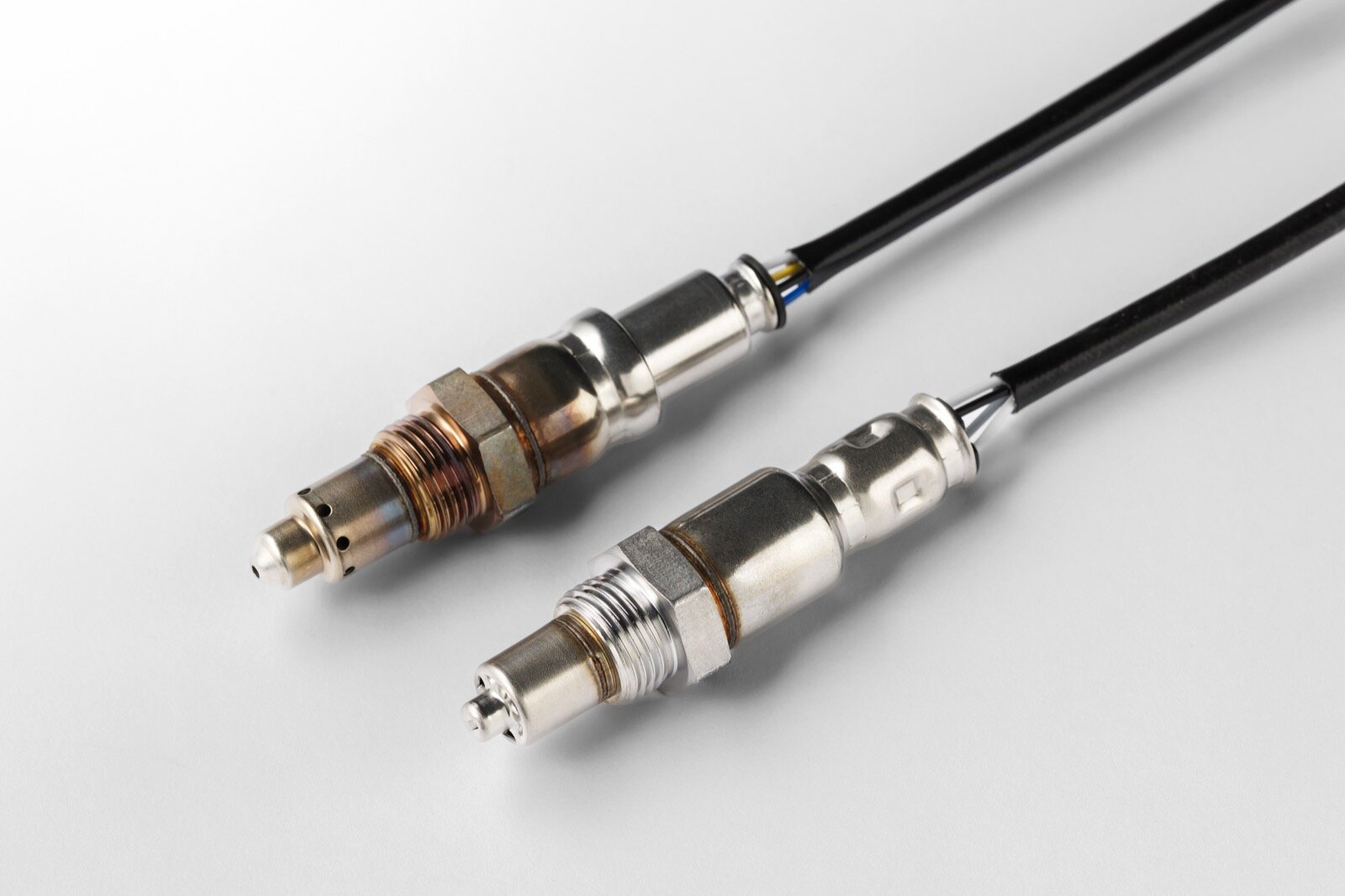 Sensors that detect whether the exhaust gas is rich or lean by using the characteristic that the output voltage changes sharply at the stoichiometric air-fuel ratio.
Sensors that, when controlled in combination with a dedicated interface, provide an output corresponding to the oxygen concentration in the exhaust gas.
 Sensors that can measure the concentration of NOx, a regulated substance, with high accuracy. They can also measure oxygen concentration at the same time.