



Zirconia oxygen sensor
Overview
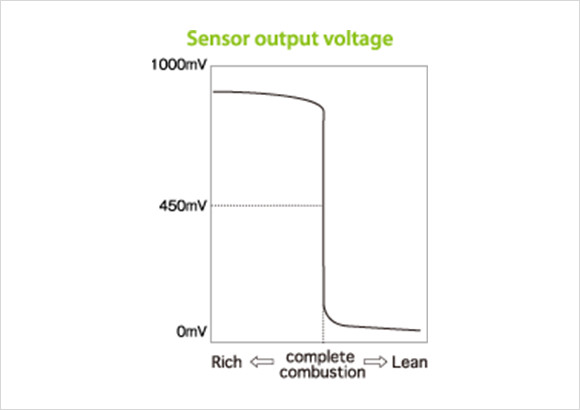
This sensor utilizes the characteristic that the output voltage changes abruptly at the stoichiometric air-fuel ratio to detect whether the exhaust gas mixture is rich or lean.
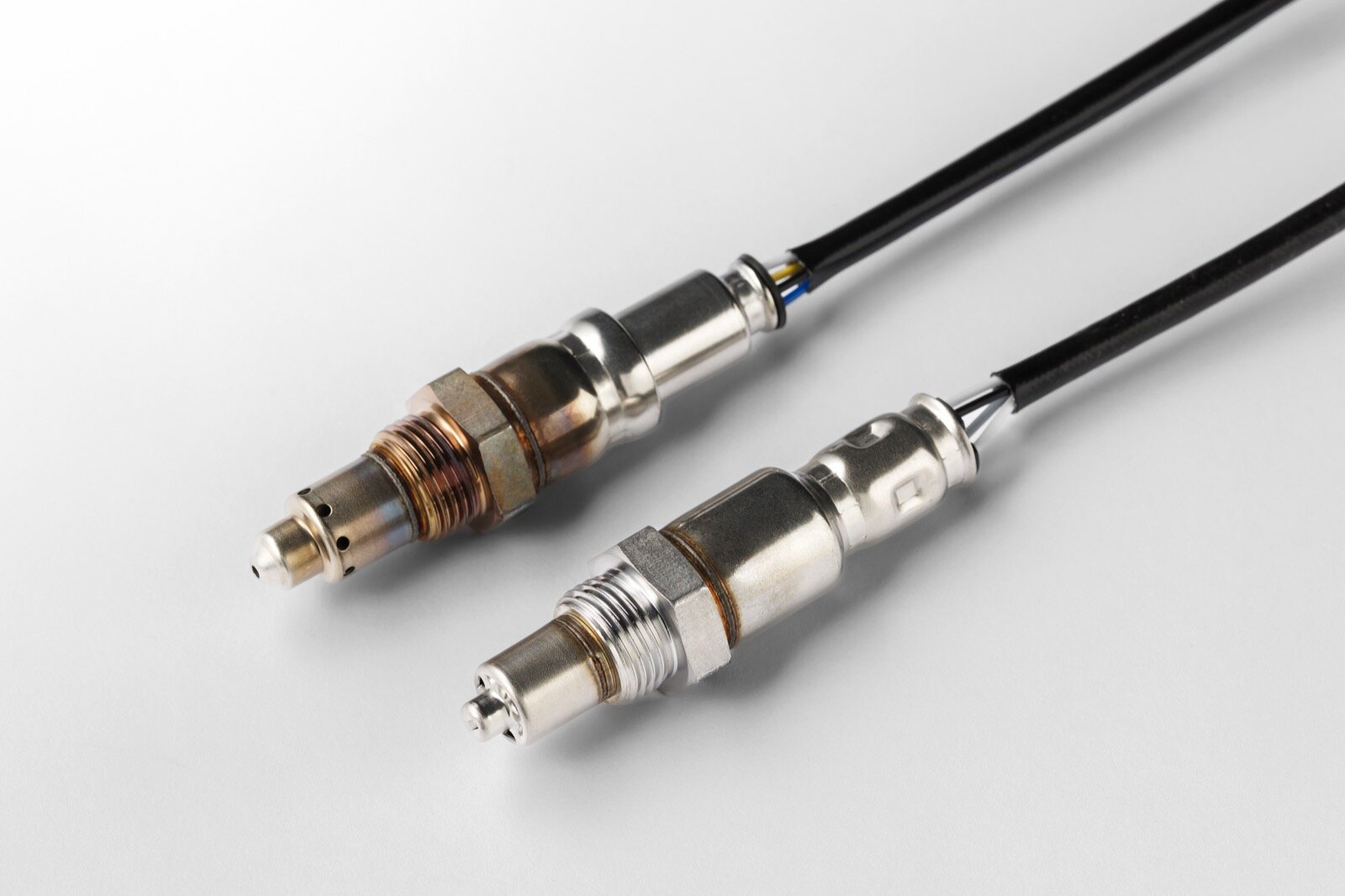
What is a zirconia oxygen sensor?
By placing porous electrodes on both sides of a zirconia ceramic, and exposing one side to the atmosphere and the other to exhaust gas, an electromotive force is generated depending on the oxygen concentration in the exhaust gas. This property can be utilized for controlling the air-fuel ratio of exhaust gases.
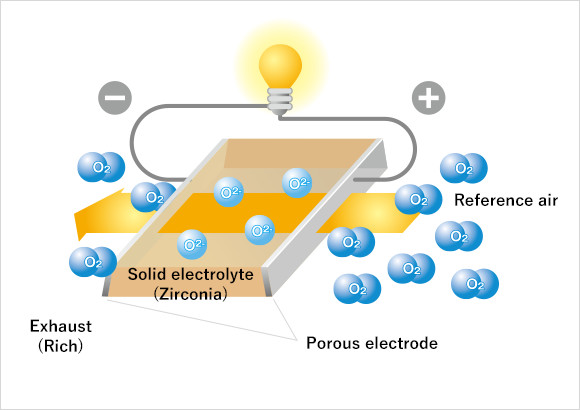
The diagram above shows the behavior of an oxygen sensor when exposed to exhaust gas after rich (excess fuel, low oxygen concentration) combustion. By keeping the zirconia at a high temperature and giving it ionic conductivity, an oxygen ion flow is generated from the oxygen-rich atmosphere to the exhaust gas. Since oxygen ions have a negative charge, an electromotive force is generated between the electrodes at both ends of the zirconia. On the other hand, in the case of exhaust gas after lean (lean fuel, high oxygen concentration) combustion, the oxygen concentration gradient between the electrodes at both ends is small, so no electromotive force is generated.
Application of zirconia oxygen sensors to four-wheeled vehicles
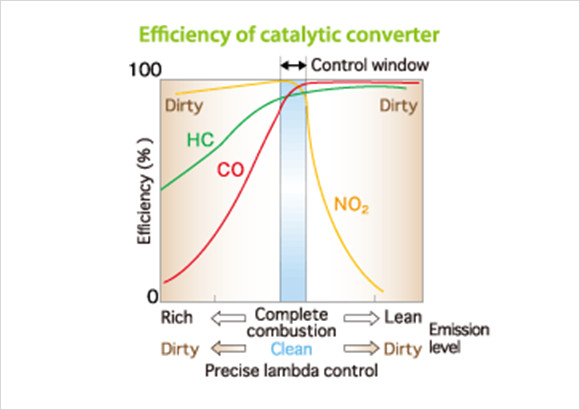
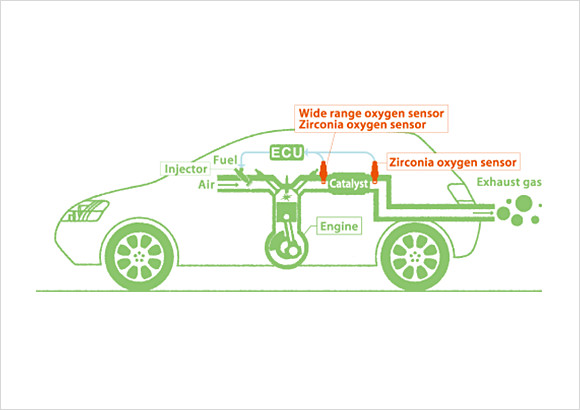
To meet stringent exhaust gas regulations, it is necessary to maintain the catalytic converter's exhaust gas purification rate as high as possible. As shown in the figure on the right, the exhaust gas purification rate is highest near the stoichiometric air-fuel ratio, and if engine combustion is controlled around the stoichiometric air-fuel ratio (within the figure window), clean gases will be emitted.
On the other hand, as mentioned earlier, the zirconia oxygen sensor generates an output of 0⇔1V depending on the oxygen concentration in the exhaust gas. By controlling fuel injection based on the signal from the oxygen sensor, combustion near the stoichiometric air-fuel ratio is possible, resulting in cleaner exhaust gases.
Sensors are also installed downstream of the catalytic converter to support self-diagnostic functions such as catalytic converter degradation detection. Generally, modern vehicles use one sensor upstream and one downstream for each bank. In other words, a V-type engine is equipped with four oxygen sensors per vehicle.
Application to two-wheeled vehicles
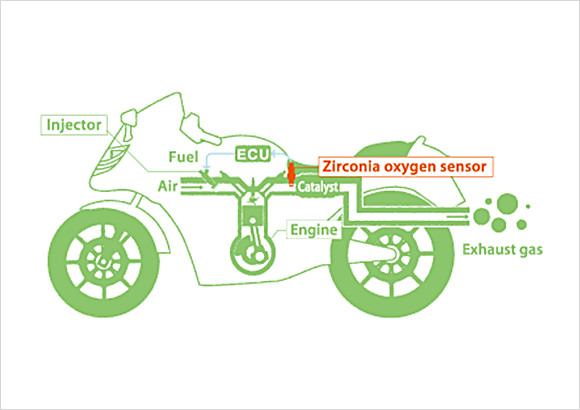
Motorcycles are also subject to stricter exhaust gas regulations, and, like four-wheeled vehicles, there is a growing demand for exhaust gas treatment systems that utilize fuel injection control and catalytic converters. In the case of motorcycles, a heaterless type is used when the exhaust temperature is high because the vehicle is close to the engine, while a heated type is used when the exhaust temperature is low because the vehicle is farther from the engine.
Other application examples
In addition to the passenger vehicles mentioned above, it is also used for general-purpose engines in lawnmowers and generators, as well as for engine combustion control in agricultural and construction machinery. It is used in both upstream and downstream applications of the catalyst.
Main Products
Zirconia Oxygen Sensor for Automotive
Purpose
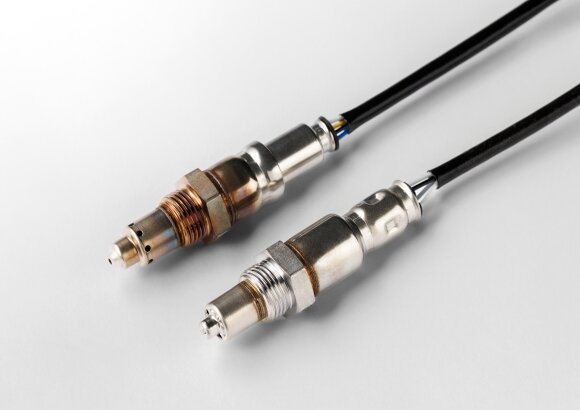
This is a zirconia-type oxygen sensor with binary output (0⇔1V output) that is widely used for four-wheeled vehicles.
Features
- High heat resistance, water resistance, and durability reliability.
- Excellent output stability, early activation
- Support for downstream applications of catalysts
Zirconia Oxygen Sensor for Motorcycles (Heated type)
Purpose
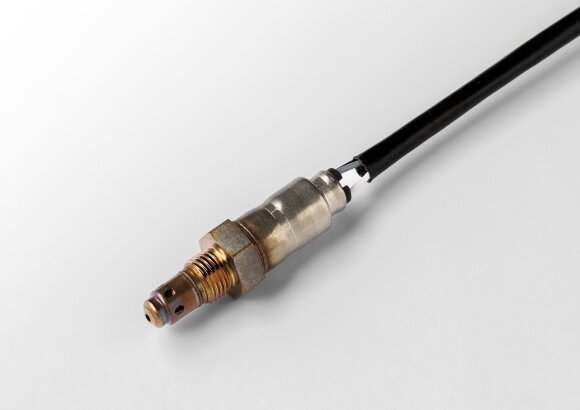
This is a small, lightweight oxygen sensor designed for use in environments with many mounting restrictions, such as motorcycles. It is significantly smaller than oxygen sensors for four-wheeled vehicles. Furthermore, it uses a plate-shaped element to achieve early activation.
Features
- By using stacked plate-shaped elements, the main unit has been made smaller and lighter.
- A highly vibration-resistant structure ideal for motorcycles with high engine speeds.
- By integrating the element and heater, power saving and early activation are achieved. It also complies with cold start emission regulations.
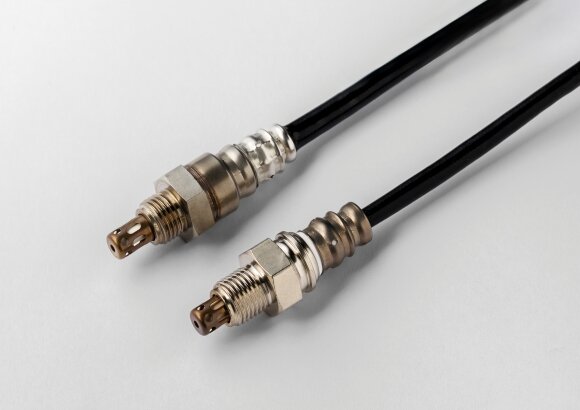
Zirconia Oxygen Sensor for Motorcycles (Non-Heated Type)
Purpose
This is a heaterless, compact oxygen sensor that does not require electricity, as it utilizes the heat energy of exhaust gas. Its application in motorcycles, where exhaust temperature is easily utilized, is increasing. Its compact design allows for flexible installation requirements.
Features
- A heaterless structure that does not require electricity, effectively utilizing heat received from exhaust gases to avoid power reduction due to increased power demands.
- Small, lightweight, and highly vibration-resistant, specifically designed for motorcycles.
For inquiries regarding this product, please contact us here.
Related Products
Sensors that detect whether the exhaust gas is rich or lean by using the characteristic that the output voltage changes sharply at the stoichiometric air-fuel ratio.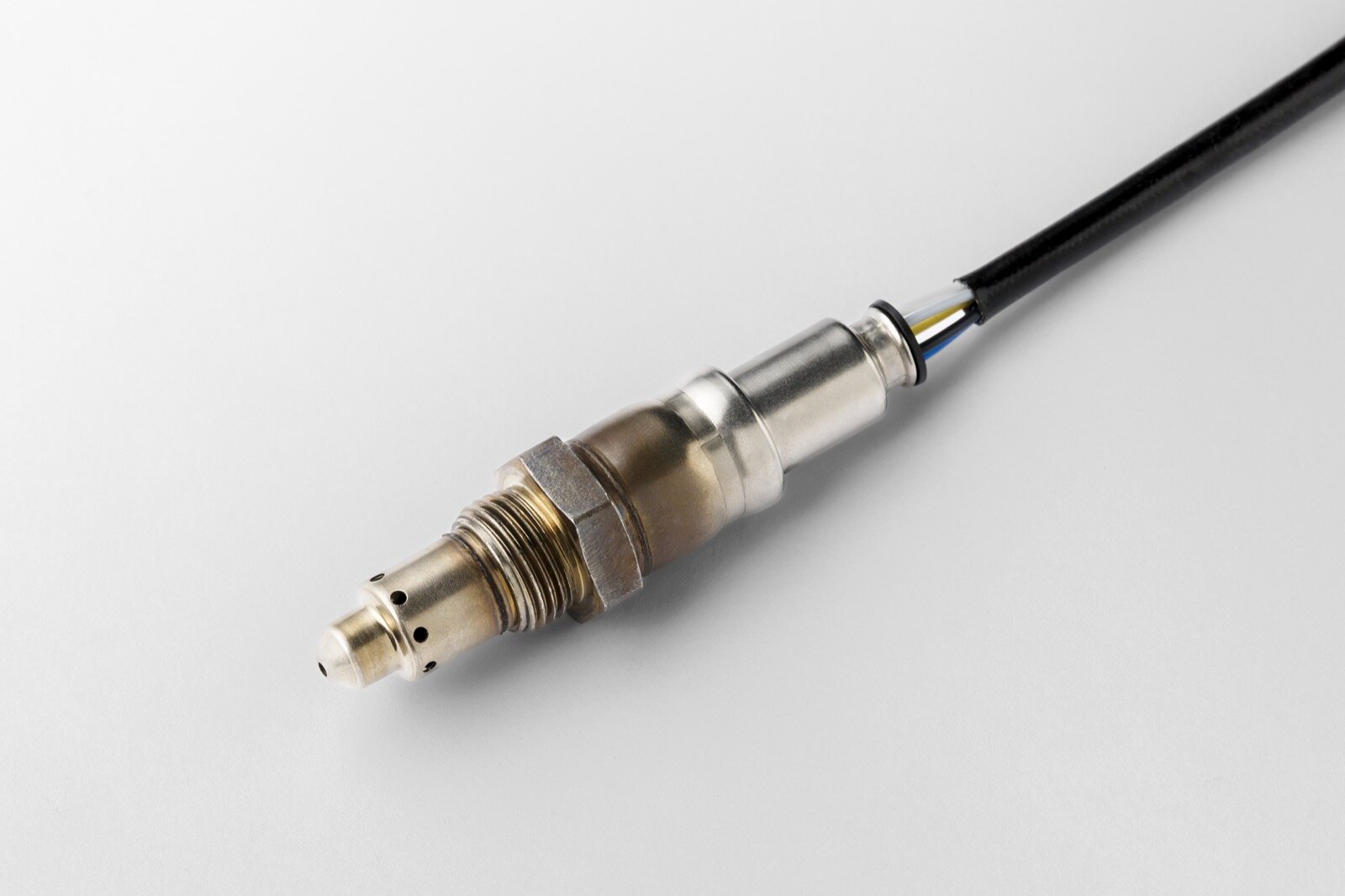 Sensors that, when controlled in combination with a dedicated interface, provide an output corresponding to the oxygen concentration in the exhaust gas.
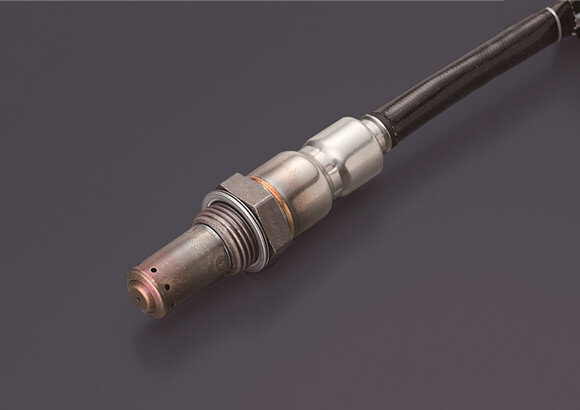 Sensors that can measure the concentration of NOx, a regulated substance, with high accuracy. They can also measure oxygen concentration at the same time.